
"coffee social rules"
300 article(s) found

Introduction of exquisite coffee beans in Tanzania coffee flavor manor area
In October 2000, the Revolutionary Party won the second multi-party election by an absolute majority. However, the opposition Civic United Front refused to recognize the results of the Sang Island election and called on its supporters to hold protests, sparking large-scale bloodshed. The Mkapa government has taken resolute measures to maintain social order, while having dialogue with the opposition parties to promote the signing of a reconciliation agreement between the ruling and opposition parties, thus maintaining social stability.

4C Association Coffee Certification
4C certification is currently widely accepted in the world, involving coffee cultivation, production, processing and other aspects of the supply chain sustainable development management rules, including social, environmental and economic principles.

Introduction to the boutique coffee bean flavor manor of Kopi Luwak in Bali, Indonesia
Balinese are made up of a variety of South Island immigrants and pictures of prehistoric mixed-race Bali around 2500 BC (3 pictures of Bali). During the Bronze Age around 300 BC, Bali had a very progressive culture; the farmland Irrigation Organization (Subak), which is still in use, and irrigation systems were inherited from that time. In about the 10th century, India

Introduction of Cuban Crystal Coffee in the American region south of the United States
The people of South America have waged a long and heroic struggle for freedom and liberation. In the second half of the 18th century, the system maintained by the sovereign state increasingly became the biggest obstacle to social development, and the development of this principal contradiction pushed the South American people to embark on the road of the War of Independence. In 1810, armed uprisings spread throughout South America. After more than a decade of bloody struggle, Xi was finally overthrown.
Quality Coffee Certification Organization UTZ Certified quality Coffee Certification
In Mayan language, UTZ means quality. UTZ Certification body is an independent organization that certifies all kinds of quality coffee, tea and cocoa in the world. UTZ certification, also known as good coffee (tea / cocoa) certification, refers to the responsible coffee (tea / cocoa) mark recognized by UTZ after the production of coffee (tea / cocoa) has passed environmental, social and economic independent audit standards. UTZ certification

Hot search again! The new rules of pleasant queuing are controversial.
▲ Click follow | Daily boutique Coffee Culture Magazine Coffee Workshop on the evening of August 5th, # Tea Beauty does not support ordering and two people queuing up at the same time # the topic has been ranked No. 1 in hot search, with 300 million readings, which has aroused the attention and discussion of many netizens. On July 4, a consumer posted on the social platform that she and her friends

What is the taste of Salvadoran coffee beans and the characteristics of Salvadoran coffee beans
Following Cafe (official Wechat account vdailycom) found that Salvadoran coffee beans taste moderately sour, bitter and sweet when the Cafe opened its own shop. Flavor: the characteristics of El Salvador coffee beans with balanced taste and good texture El Salvador (ElSalvador) is one of the small countries in Central America, where coffee is light, aromatic, pure and slightly sour

Taste characteristics of Tanzania Coffee Bean Flavor description method
In October 2000, the Revolutionary Party won the second multi-party election by an absolute majority. However, the opposition Civic United Front refused to recognize the results of the Sang Island election and called on its supporters to hold protests, sparking large-scale bloodshed. The Mkapa government has taken resolute measures to maintain social order, while having dialogue with the opposition parties to promote the signing of a reconciliation agreement between the ruling and opposition parties, thus maintaining social stability.

Aromatic Burundi Coffee Flavor Description Grind Treatment Taste Characteristics Variety Introduction
Burundi has two main ethnic groups, the Tutsi, who number only about one and a half, have ruled the country since the sixteenth century and control a civilian population composed mainly of Hutu, plus a very rare indigenous population of Twa. This abnormal social structure in which ethnic minorities occupy a high position has buried the evil seeds of national instability, and in 1

Introduction to the unique and strong flavor of Costa Rican Fenghuang Manor Coffee
National Liberation Party (Partido de Liberacin Nacional): the ruling party. It was founded in April 1952 and came to power nine times. At present, there are about 630000 party members, belonging to political parties of a social democratic nature. Internally, we should improve democracy, increase investment in public utilities, improve the democratic system, implement the policy of opening up trade to the outside world, increase efforts to attract foreign investment, carry out pluralistic diplomacy, and support regional integration.

Fruit sour Bolivian snow vein manor coffee flavor varieties Introduction
Mo actively carried out the democratic cultural revolution and carried out major changes in the political and economic fields, such as the establishment of a constituent assembly, the nationalization of oil and gas resources, and land reform. In January 2009, Bolivia held a referendum to adopt a new constitution. On December 6 of the same year, Bolivia held its first national election after the promulgation of the new constitution. President Morales was re-elected with 64.2% of the votes.
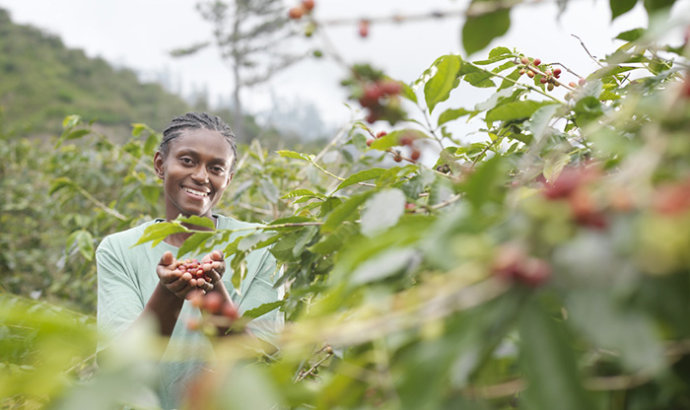
The abnormal prosperity of Brazil's "coffee kingdom"
From the early 16th century to the 1820s, Portugal colonized Brazil for more than 300 years. Portugal colonial rule had a profound impact on Brazil's economy, politics, society and culture. Single product system and large estate system became fetters restricting the development of modern Brazil's economy. Due to the incomplete nature of the independence movement, Brazil remained a colony for 100 years after independence.

Costa Rican Yersalo Coffee Flavor and taste introduction to the characteristics of boutique coffee beans in the manor area
The Government of Costa Rica has 21 ministries, namely: Ministry of Foreign Affairs and worship, Ministry of the President, Ministry of Internal Affairs, Police and Public Security; Ministry of Finance, Ministry of Foreign Trade, Ministry of economy, Industry and Commerce; Ministry of Planning and Economic Policy; Ministry of Health; Ministry of Science and Technology; Ministry of decentralization and Local Development; Ministry of Social Welfare and Family; Ministry of Public works and Transport; Ministry of Public Education; Housing and Resettlement

Introduction to the unique and strong flavor and taste of Costa Rican Fire Phoenix Manor Coffee
(1) National Liberation Party (Partido de Liberacin Nacional): the ruling party. It was founded in April 1952 and came to power nine times. At present, there are about 630000 party members, belonging to political parties of a social democratic nature. Internally, we should improve democracy, increase investment in public utilities, improve the democratic system, implement the policy of opening up trade to the outside world, increase efforts to attract foreign investment, carry out pluralistic diplomacy, and support.

"is it too much for each person to reduce a drink?" The discussion posted by the coffee shop owner caused bipolar controversy among netizens.
Recently, the manager of a coffee shop posted an article on a social platform to seek the opinions of netizens. The contents are as follows: (as it is written in Cantonese, the following will be translated into Putonghua) our coffee shop has a minimum consumption of one drink per dining guest. (some netizens who have been to this coffee shop have commented on the shop.

Introduction to the flavor and taste characteristics of Bali Coffee Manor, which is permeated with strong aristocratic culture.
It was then that white people from Europe began to visit Bali. In the description of Balinese photography style by Dutch explorers, Balinese photography style (7 pictures), Balinese pagan mystery, rich social culture and warm climate make the Dutch curious and moved. Fantasize that as long as Dutch civilization and commerce are brought into Bali, it can lead Balinese to a better place.

Introduction to the characteristics of the methods for describing the taste and flavor of Bali coffee
In 1908, the Dutch flag was finally planted all over Indonesia and Bali, and the Bali aristocracy ended the era of aristocratic rule in several Puptan rituals that committed suicide for dignity. The Dutch ruled Bali for 34 years, followed by three more years by the Japanese during World War II. It was not until 1949, with the intervention of the United Nations, that the Netherlands withdrew from Indonesia and the island.

Introduction of boutique coffee with characteristics of varieties, flavor and taste in Burundian coffee producing area
There are two major ethnic groups in Burundi, and only about 15 percent of the Tutsi have ruled the country since the 16th century, controlling the civilian population, which is mainly made up of Hutu, plus a very small number of indigenous Twa. This abnormal social structure in which ethnic minorities occupy a high position has buried the evil seed of national instability, and in 1

Introduction to the characteristics of Bali Coffee Flavor Manor
In 1908, the Dutch flag was finally planted all over Indonesia and Bali, and the Bali aristocracy ended the era of aristocratic rule in several Puptan rituals that committed suicide for dignity. The Dutch ruled Bali for 34 years, followed by three more years by the Japanese during World War II. It was not until 1949, with the intervention of the United Nations, that the Netherlands withdrew from Indonesia and the island.

Burundian coffee flavor with spicy aftertaste introduction to boutique coffee beans in manor production area
There are two major ethnic groups in Burundi, and only about 15 percent of the Tutsi have ruled the country since the 16th century, controlling the civilian population, which is mainly made up of Hutu, plus a very small number of indigenous Twa. This abnormal social structure in which ethnic minorities occupy a high position has buried the evil seed of national instability, and in 1